

Water scarcity and unpredictable rainfall make precision agriculture essential for commercial farms across East Africa.
Commercial farms across East Africa face a dual challenge: water costs are rising while rainfall patterns grow harder to predict. Fixed irrigation schedules waste water on wet days and under-irrigate during dry spells, directly impacting yield and input costs.
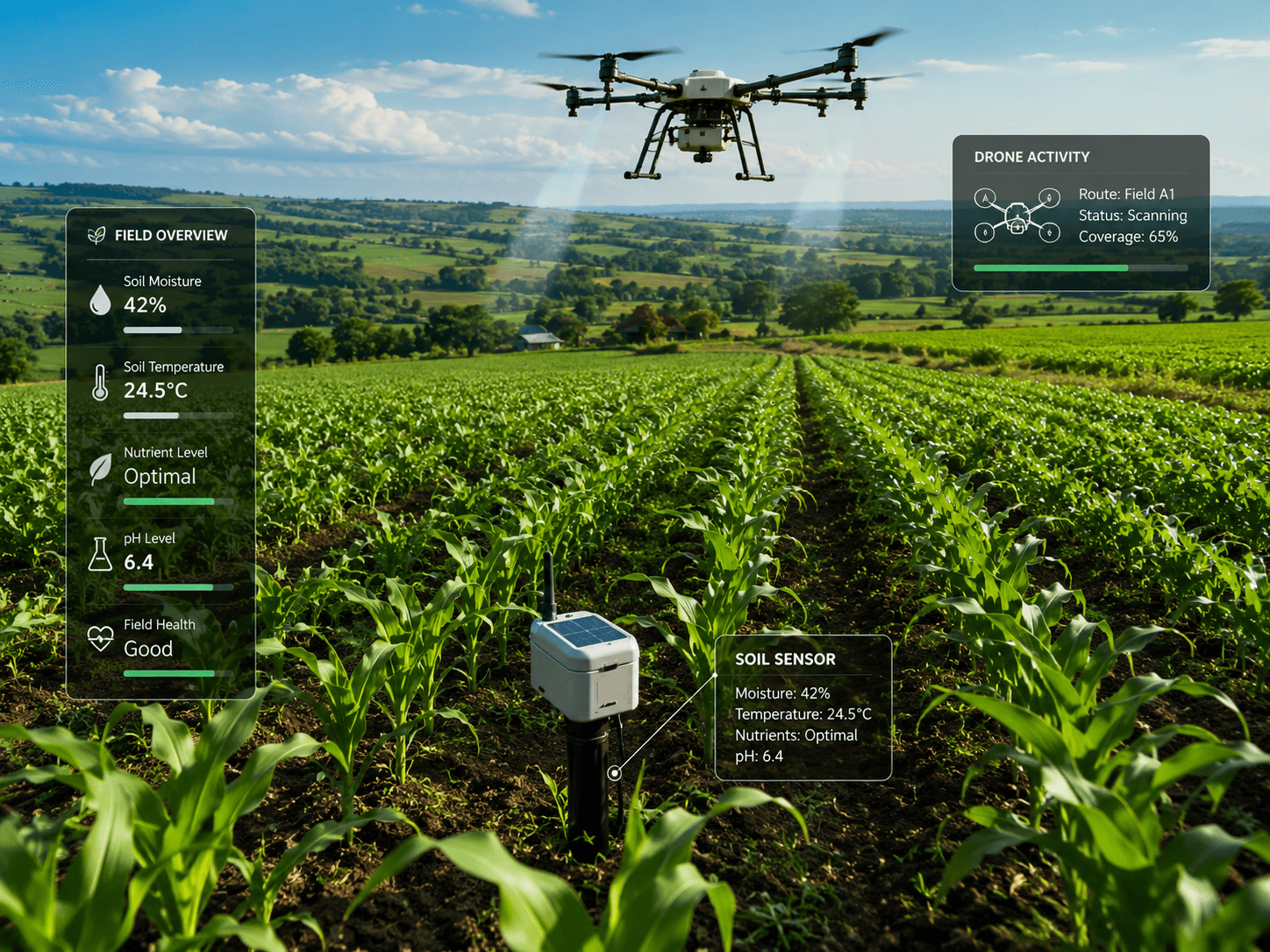
Smart irrigation systems use soil moisture probes, local weather data, and automated valve control to apply water only when and where crops need it. Farm managers monitor every zone from a phone or desktop dashboard and receive alerts before stress conditions damage plants.
Deployments on estates exceeding 500 acres have shown water reductions of up to 60% without sacrificing yield, because irrigation decisions shift from calendar-based to data-driven. Agronomists gain a continuous record of field conditions rather than periodic manual readings.
The crops that benefit most are the ones where water stress shows up as an economic loss long before it shows up as a visibly wilted plant: tea and horticultural export crops in particular are penalised on grade and price for the kind of moisture-stress inconsistency that a soil probe network catches at the root zone, days before a field scout would notice it by eye. Pairing ground sensors with periodic drone NDVI imagery gives estate managers both the early-warning signal and the field-wide confirmation, rather than relying on either one alone.
For farms planning expansion, IoT irrigation infrastructure scales zone by zone. Start with your highest-value blocks, prove ROI, and extend coverage without replacing the core platform.