

Aging tanks, manual dipping, and theft cost petroleum retailers across Kenya, Tanzania, and Uganda more than most operators realize. Here is how the industry is closing the gap.
Fuel loss is one of the least-discussed line items on a petroleum retailer's P&L, largely because most operators still measure it the way they did twenty years ago: a technician with a dip stick, once or twice a day. That method cannot detect a slow leak, a miscalibrated meter, or an attendant skimming a few litres per shift. It only reveals the damage after it has already accumulated.
Industry bodies like the Petroleum Outlets Association of Kenya have pushed operators toward Statistical Inventory Reconciliation, a discipline borrowed from the US and European retail fuel sector that treats every litre as accountable from delivery to pump. The approach requires continuous tank-level data, not periodic snapshots, because variance is a pattern you detect over hundreds of transactions, not a number you catch once a month.
The underlying causes are consistent across Kenya, Tanzania, and Uganda: aging underground tanks with imprecise dipstick calibration, environmental conditions like temperature swings that affect fuel volume readings, and theft that goes unnoticed for months at high-volume sites specifically because nobody is watching continuously. A station losing even 0.5% of throughput to unexplained variance is often losing more in a year than the automation system that would have caught it.
There is also a compliance dimension operators increasingly cannot ignore. Kenya's Energy and Petroleum Regulatory Authority has tightened expectations around metrology and product quality at the pump, and a station that can produce continuous, tamper-evident reconciliation data during an inspection is in a fundamentally different position than one relying on a dipstick logbook that inspectors have learned to treat with scepticism. Automated reconciliation is as much a regulatory shield as it is a loss-prevention tool.
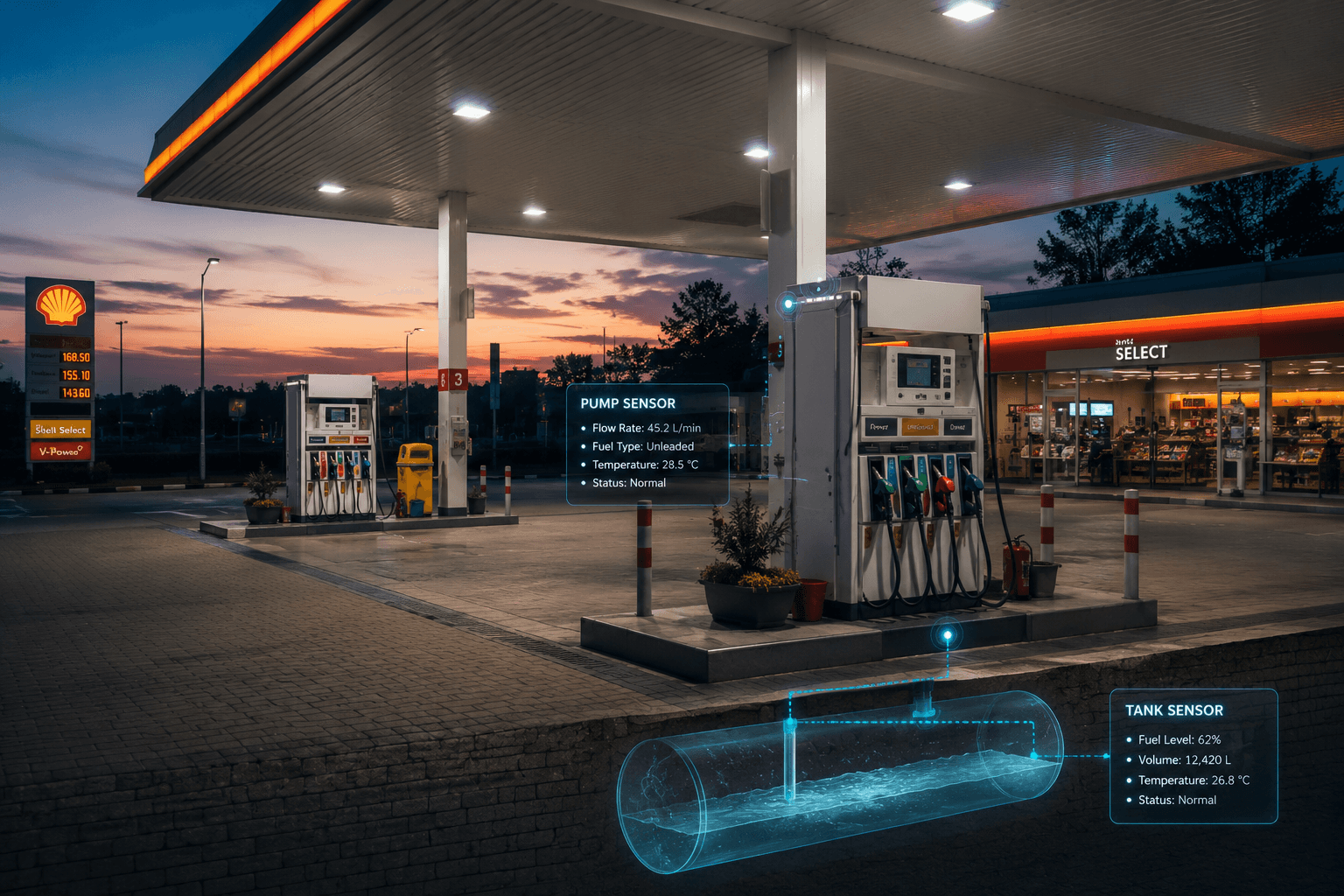
AdvaIoT's forecourt platform applies this same reconciliation discipline automatically: tank probes report every minute, pump transactions are matched to drawdown in real time, and any deviation beyond a configured threshold raises an alert immediately rather than at month-end. For a 12-station network we deployed in Kenya, that shift took variance from 3.2% to under 0.2% within weeks, not because fuel theft disappeared overnight, but because it became visible the moment it happened.