


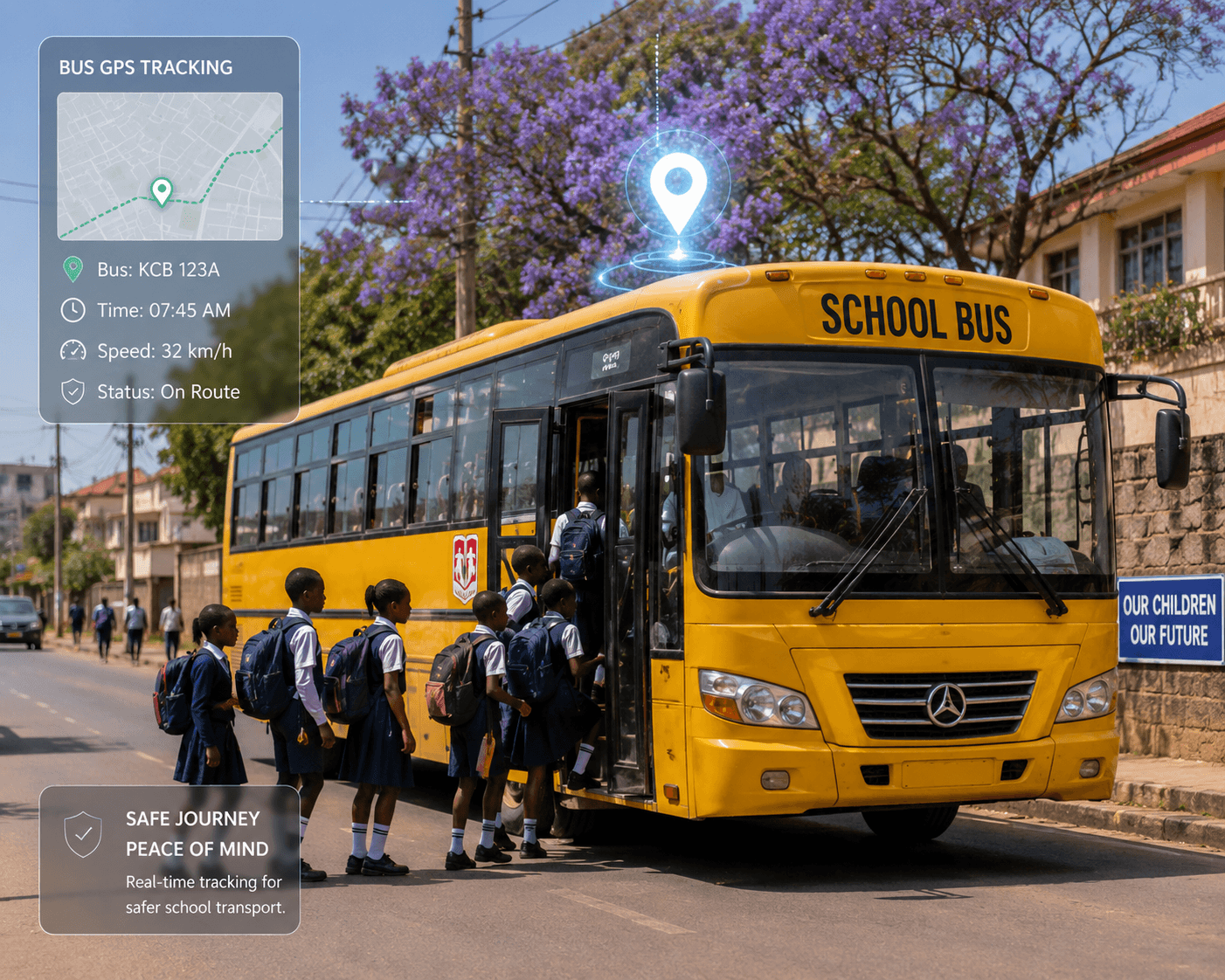
NTSA has pushed hard for GPS-tracked, camera-equipped school transport. Here is what the regulatory back-and-forth means for schools deploying it anyway.
Kenya's National Transport and Safety Authority has spent the past two years tightening the rules around school transport, proposing that every school vehicle carry a vehicular telematics system conforming to KEBS standards, alongside a passenger-facing camera, functional seatbelts, speed limiters capping vehicles at 80km/h, and a strict 5am-to-10pm operating window. The direction of travel is unambiguous even where the politics are not: parents and schools are expected to be able to answer, at any moment, where a bus is and whether the child on it is safe.
That direction of travel has not been a straight line. In mid-2026 the Senate annulled a package of NTSA rules, including parts of the school transport regulations, after pushback from operators over cost and implementation timelines. For school administrators, the lesson is not that GPS tracking is optional, it is that regulation is a floor, not a ceiling, and that schools serious about safety have generally deployed telematics ahead of the compliance deadline rather than waiting for it to be legislated and then enforced.
The practical case for doing so has nothing to do with regulation. A live GPS feed lets transport coordinators and parents see exactly where a bus is at pickup and drop-off, an in-bus camera gives administrators an objective record when an incident is disputed, and route-deviation alerts catch a driver going off-plan before it becomes a headline. None of that requires waiting for a gazette notice; it requires hardware that works reliably every single school day, in traffic, for years.
Insurance is quietly becoming a second driver alongside parental expectation. Underwriters covering school transport fleets increasingly ask what telematics and camera evidence a school can produce after an incident, and a documented, continuously logged safety record is starting to influence premium pricing the same way it already does for commercial fleets. Schools that treat telematics purely as a parent-communication tool are leaving that side of the value on the table.
AdvaIoT's school transport deployments combine live GPS with in-bus cameras and parent-facing arrival notifications, built to keep working whether or not the regulatory landscape shifts again. Schools that adopt this before it is mandatory are not getting ahead of a compliance deadline, they are answering a question parents are already asking.